

If you live in Logan, Utah, you know how unpredictable the weather can be. Spring snowmelt, heavy rainstorms, and compacted soils can quickly turn a healthy yard into a muddy mess. Standing water isn’t just an eyesore — it can damage your lawn, suffocate plant roots, attract mosquitoes, and even threaten your home’s foundation.
The good news? Most yard drainage problems are fixable — and often more affordable than homeowners think.
Let’s break down what causes drainage issues in yards, how drainage actually works, and the best ways to fix standing water for good.
What Causes Drainage Issues in Yards?
Drainage problems in Logan typically come from a combination of:
- Clay-heavy or compacted soil
- Poor grading (yard sloping toward the house)
- Blocked or undersized downspouts
- Low spots that collect runoff
- Overwatering
Healthy soil needs both air and water in balance. Think of soil like a jar filled with different-sized marbles. The spaces between them hold water and oxygen. When soil is compacted or made of dense clay, those spaces shrink. Water can’t move properly — and roots can’t “breathe.”
That’s when puddles form.
How Does Yard Drainage Work?
Good drainage means water:
- Enters the soil at a moderate rate
- Stays long enough for roots to absorb what they need
- Drains away so oxygen can replace it
If water drains too fast (like in sandy soil), plants dry out.
If it drains too slowly (like in clay), roots can rot.
The goal isn’t to eliminate water — it’s to control how it moves.
What To Do If Soil Has Poor Drainage?
If your soil stays soggy days after rain, you likely have poor drainage.
Here’s what works:
1. Improve the Soil Structure
In planting areas, mix in:
- Compost
- Shredded bark
- Organic matter
This helps create pore space so water and oxygen can move freely.
However — soil amendment alone won’t fix major standing water problems near foundations or large lawn areas. That’s where structural solutions come in.
How Do I Properly Drain My Yard?
Proper drainage in Logan homes usually involves one (or more) of the following systems:
French Drains
A trench filled with gravel and perforated pipe that redirects water away from problem areas.
Best for:
- Chronic puddling
- Water near foundations
- Sloped yards collecting runoff
Dry Creek Beds
A decorative rock channel that moves surface water naturally across your yard.
Best for:
- Front yard curb appeal
- Sloped properties
- Visible runoff control
Catch Basins & Channel Drains
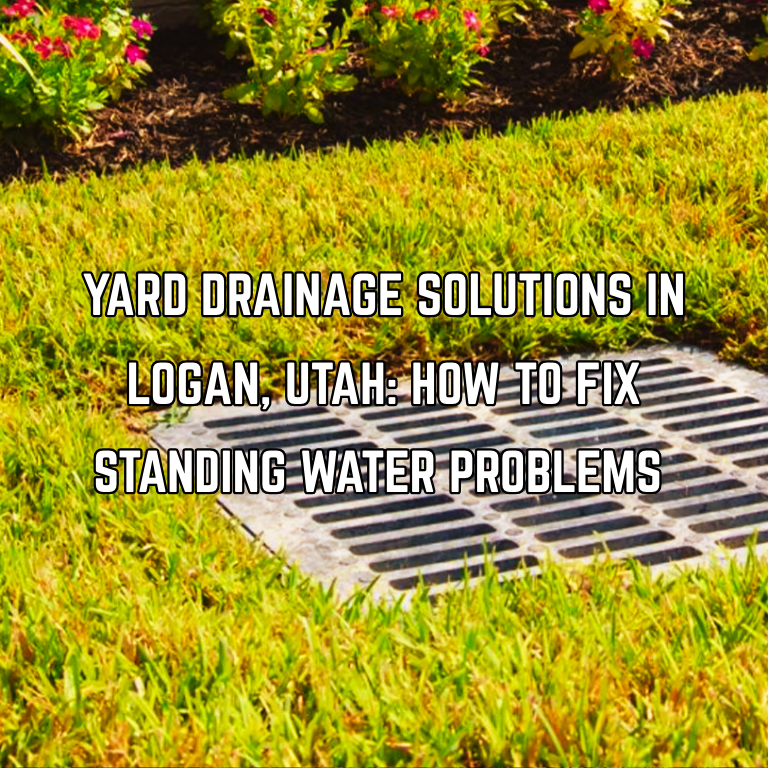
Installed in low spots to collect and redirect pooling water underground.
Best for:
- Patios
- Driveways
- Flat lawns
Regrading
Sometimes the simplest fix is adjusting the slope so water flows away from your home instead of toward it.
How Do I Fix a Drainage Problem in My Yard?
The solution depends on the cause.
- Water near foundation? → Install a French drain or extend downspouts.
- Lawn always soggy? → Improve grading and add subsurface drainage.
- One persistent low spot? → Install a catch basin or reshape the grade.
A professional drainage assessment helps determine the root issue — not just the symptom.
What Is the Cheapest Drainage Method?
The lowest-cost options typically include:
- Extending downspouts
- Adjusting grading manually
- Creating shallow swales (small surface channels)
However, “cheap” doesn’t always mean effective long-term. Poor DIY drainage can actually push water toward your foundation — leading to much bigger repair costs later.
Can I Dig a Hole and Fill It With Gravel for Drainage?
This is one of the most common questions.
Short answer: Usually no.
A gravel-filled hole (sometimes called a dry well) can temporarily hold water — but without proper piping and an exit path, it simply fills up and stays saturated. In heavy clay soils common around Logan, Utah, water may not disperse fast enough.
Gravel alone does not fix drainage. Water needs somewhere to go.
What Is Best for Drainage in a Yard in Logan, Utah?
In Northern Utah climates, the best long-term drainage solutions often include:
- French drains installed below frost depth
- Proper grading away from foundations
- Drainage rock combined with perforated pipe
- Downspout redirection systems
Because Logan experiences snowmelt and seasonal freeze-thaw cycles, systems must be installed correctly to avoid shifting, clogging, or collapse.
Why You Should Fix Standing Water Quickly
Standing water can lead to:
- Lawn fungus and root rot
- Basement moisture issues
- Foundation cracks
- Ice hazards in winter
- Mosquito breeding areas
Ignoring drainage problems rarely makes them disappear — they typically worsen over time.
Professional Yard Drainage Solutions in Logan, Utah
Every yard is different. Soil composition, slope, irrigation layout, and roof runoff all play a role.
A proper drainage plan looks at:
- Soil type
- Elevation changes
- Water flow patterns
- Long-term landscape goals
When designed correctly, drainage systems are invisible — but extremely effective.
Final ThoughtsStanding water is frustrating — but it’s fixable.
If you’re dealing with soggy lawn areas, pooling water near your home, or erosion issues, the key is identifying the real cause and choosing the right system.
Well-designed yard drainage solutions in Logan, Utah don’t just remove water — they protect your landscape investment and your home’s structure for years to come.