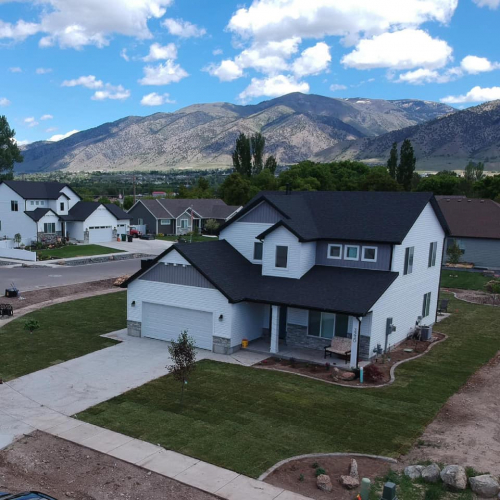

For Cache Valley homeowners, the choice between sod and seed can make or break your lawn establishment success. Sod offers instant results but costs 3-5 times more than seeding, while grass seed requires patience but allows better root development in our unique Utah soil conditions. Your decision ultimately depends on your budget, timeline, and specific yard conditions in our high-altitude climate.
Cache Valley’s elevation of 4,500 feet, along with our cold winters and hot, dry summers, creates unique challenges for lawn establishment. Whether you’re starting fresh or renovating an existing lawn, understanding how sod and seed perform in our local conditions will help you make the right choice.
Understanding Cache Valley’s Growing Conditions
Our region experiences a semi-arid climate with distinct seasonal variations that significantly impact grass establishment. The growing season typically runs from late April through September, with the best establishment windows occurring in spring and early fall.
Key Climate Factors:
- Elevation: 4,500+ feet above sea level
- Average annual precipitation: 15-18 inches
- Temperature extremes: -10°F to 95°F
- Growing degree days: 2,800-3,200 annually
- First frost: Mid to late September
- Last frost: Early to mid-May
These conditions favor cool-season grasses like Kentucky bluegrass, tall fescue, and perennial ryegrass, which both sod and seed options typically feature in our area.
Sod Installation: The Instant Lawn Solution
Sod provides immediate lawn coverage and curb appeal, making it attractive for homeowners who need quick results. In Cache Valley, sod farms typically grow Kentucky bluegrass blends adapted to our climate conditions.
Benefits of Sod
- Immediate Results and Curb Appeal Sod transforms your yard instantly, providing full coverage within hours of installation. This immediate gratification makes it ideal for new construction, real estate sales, or when you need an established lawn quickly.
- Erosion Control on Slopes Cache Valley’s varied topography often includes sloped areas where erosion control is crucial. Sod’s established root system provides immediate soil stabilization, preventing washout during spring snowmelt or summer thunderstorms.
- Weed Suppression Mature sod grass outcompetes weeds naturally, reducing the need for herbicide applications during establishment. This thick coverage prevents annual weeds like crabgrass and foxtail from taking hold.
- Predictable Establishment With proper soil preparation and irrigation, sod success rates exceed 95% in Cache Valley conditions. You know exactly what grass variety you’re getting and can predict the final appearance.

Drawbacks of Sod
- Higher Initial Investment Sod costs typically range from $0.45 to $0.85 per square foot in the Logan area, not including soil preparation and installation labor. For a typical 5,000 square foot lawn, expect total costs between $3,500 and $6,000.
- Limited Root Development Sod roots often struggle to penetrate beyond the original soil interface, especially in Cache Valley’s clay-heavy soils. This shallow root system makes the lawn more susceptible to drought stress and winter damage.
- Installation Window Constraints Sod must be installed quickly after harvest to prevent deterioration. In Cache Valley, spring installation (April-May) and fall installation (August-September) provide the best results, limiting your timing flexibility.
- Soil Interface Issues The transition between sod soil and existing ground can create drainage problems and restrict root penetration, particularly problematic in our compacted clay soils.
Seeding: Building Grass From the Ground Up
Grass seed establishment requires more time and attention but often results in stronger, more resilient lawns adapted to your specific soil conditions.
Advantages of Seeding
- Cost-Effective Lawn Establishment Seed costs range from $0.05 to $0.15 per square foot for quality cool-season grass mixtures. Total project costs including soil preparation typically run $1,000 to $2,500 for a 5,000 square foot area.
- Superior Root Development Seeds germinate directly in your soil, developing extensive root systems that penetrate deep into Cache Valley’s clay substrate. This deep rooting improves drought tolerance and winter survival.
- Customizable Grass Selection You can choose specific grass varieties or mixtures tailored to your yard’s sun exposure, traffic patterns, and maintenance preferences. Options include drought-tolerant tall fescue blends or premium Kentucky bluegrass cultivars.
- Flexible Timing Options While spring and fall provide optimal conditions, seeding windows extend longer than sod installation periods. Early spring seeding (April) and fall seeding (August-September) work best in our climate.
Challenges with Seeding
- Extended Establishment Period: Grass seed requires 14-21 days for germination and 8-12 weeks for full establishment in Cache Valley conditions. During this period, the lawn remains vulnerable to weather, traffic, and weed competition.
- Weather Dependency: Late spring frosts, summer heat stress, and early fall temperature drops can disrupt seedling development. Our unpredictable weather patterns increase establishment risks.
- Intensive Initial Care: Successful seeding requires consistent moisture, careful timing of fertilizer applications, and vigilant weed control during the vulnerable establishment phase.
- Potential for Uneven Results: Variations in soil preparation, seed distribution, and irrigation can create patchy or inconsistent grass coverage, requiring overseeding to achieve uniform density.
Timing Considerations for Cache Valley
Optimal Installation Windows
Spring Installation (April 15 – May 15)
- Sod: Excellent conditions with moderate temperatures and natural moisture
- Seed: Good conditions but watch for late frost damage on new seedlings
- Soil temperature: 45-55°F optimal for cool-season grass establishment
Fall Installation (August 15 – September 15)
- Sod: Ideal timing with warm soil and cooler air temperatures
- Seed: Premium window allowing establishment before winter dormancy
- Reduced weed competition and consistent moisture from fall precipitation
Summer Installation (June – July)
- Sod: Possible but requires intensive irrigation and monitoring
- Seed: Not recommended due to heat stress and drought conditions
- High water costs and establishment risks
Climate-Specific Timing Tips
Cache Valley’s elevation creates unique microclimates. South-facing slopes experience earlier spring warming, while northern exposures remain cooler longer. Factor these variations into your installation timing.
Morning frost can occur through May and resume in September, affecting young grass plants. Monitor local weather forecasts and be prepared to protect newly established areas.
Maintenance Requirements by Method
Sod Maintenance Schedule
Week 1-2: Critical Establishment
- Daily watering to prevent drying
- Avoid foot traffic completely
- Monitor for pest issues like grubs or chinch bugs
Week 3-8: Root Development
- Reduce watering frequency, increase duration
- Begin light fertilization program
- First mowing when grass reaches 3-4 inches
Long-term: Standard Care
- Weekly deep watering during growing season
- Seasonal fertilization program
- Regular aeration to improve root penetration
Seed Maintenance Schedule
Week 1-3: Germination Phase
- Light, frequent watering to maintain surface moisture
- Absolutely no foot traffic
- Weed monitoring and selective removal
Week 4-12: Establishment Phase
- Transition to deeper, less frequent watering
- First fertilization at 4-6 weeks
- Gradual introduction of light foot traffic
Long-term: Ongoing Care
- Regular overseeding to maintain density
- Seasonal fertilization and weed control
- Standard mowing and irrigation practices
Best Grass Types for Cache Valley
Cool-Season Varieties
Kentucky Bluegrass
- Excellent cold tolerance for our winters
- Dense, attractive turf when established
- Requires consistent moisture and fertility
- Best for low to moderate traffic areas
Tall Fescue
- Superior drought tolerance
- Excellent wear resistance
- Deep root system adapted to clay soils
- Ideal for high-traffic and play areas
Perennial Ryegrass
- Fast germination and establishment
- Good traffic tolerance
- Moderate water requirements
- Often used in seed mixtures for quick coverage
Recommended Seed Mixtures
Most successful Cache Valley lawns use blended seed mixtures combining the strengths of different grass types:
- Premium Mix: 60% Kentucky Bluegrass, 30% Tall Fescue, 10% Perennial Ryegrass
- Drought-Tolerant Mix: 70% Tall Fescue, 20% Fine Fescue, 10% Kentucky Bluegrass
- Quick-Establish Mix: 40% Perennial Ryegrass, 40% Kentucky Bluegrass, 20% Tall Fescue
Making the Right Choice for Your Situation
Choose Sod When:
- You need immediate results for events or home sales
- Budget allows for higher upfront investment
- Erosion control is critical on slopes
- You have limited time for establishment care
- Soil conditions are particularly challenging
Choose Seed When:
- Budget considerations are important
- You want the strongest possible root system
- Custom grass selection matters
- You can provide consistent establishment care
- Long-term lawn performance is the priority
Hybrid Approaches
Some Cache Valley homeowners successfully combine both methods:
- Sod high-visibility areas (front yard) and seed back areas for cost savings
- Sod problematic slopes and seed level areas for optimal establishment
- Overseed established sod annually to improve density and variety
Conclusion
The choice between sod and seed for your Cache Valley lawn depends on balancing immediate needs against long-term goals. Sod delivers instant results and immediate erosion control, making it ideal when time and budget allow. Seed provides superior value and often better long-term lawn performance, requiring patience and careful establishment management.
Both methods can create beautiful, functional lawns in our unique high-altitude climate. Success with either approach depends on proper soil preparation, appropriate variety selection, and consistent care during the critical establishment period.