Does Landscaping Increase Property Value in Utah? What Homeowners Should Know
If you’re a homeowner in Logan or anywhere in Cache Valley, you’ve probably wondered at some point: Is landscaping really worth the investment?
The short answer is yes — when done correctly.
Quality landscaping can increase a property’s value by roughly 7% to 15%, and in some cases even more. On the other hand, neglected or poorly designed landscaping can lower perceived value by 8–10%. In a competitive housing market, first impressions matter, and the exterior of your home is the first thing buyers see.
But the real question isn’t just whether landscaping adds value.
It’s what kind of landscaping adds value in Utah’s climate and market.
What Are the Values of Landscaping?
Landscaping adds value in more ways than one.
Financially, it increases resale potential and improves appraisal perception. Functionally, it expands usable outdoor space. Emotionally, it creates curb appeal — that immediate reaction a buyer has when pulling up to the home.
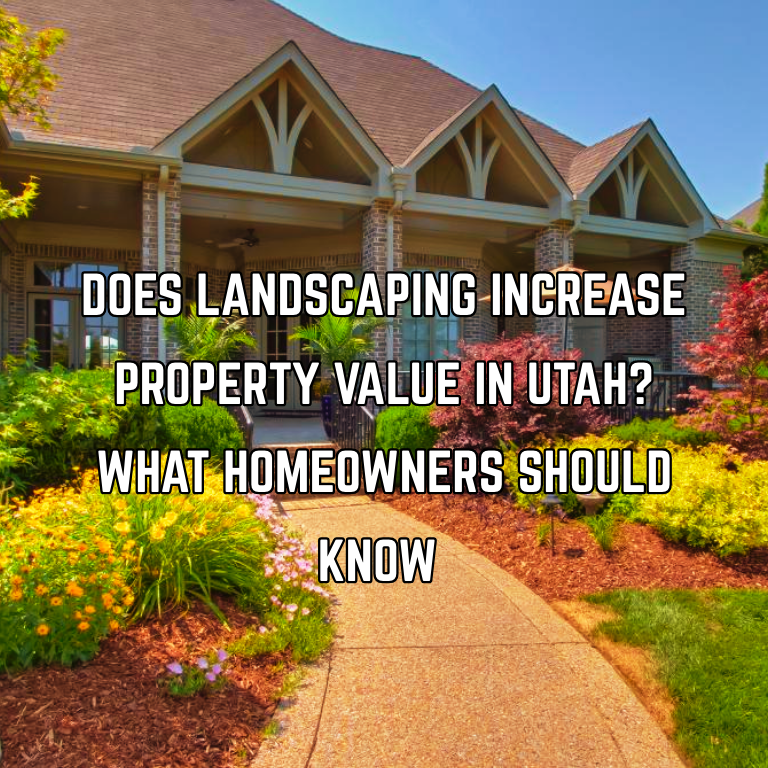
In Utah, where seasonal contrast is strong and outdoor living is a big part of the lifestyle, landscaping plays an even larger role. A well-designed front yard frames the architecture. A thoughtfully planned backyard extends living space into patios, fire features, and shaded seating areas. Strategic tree placement provides summer shade and winter wind protection.
When landscaping feels intentional and maintained, it signals that the home itself has been cared for.
What Raises Property Value the Most?
Not all landscaping projects are equal in terms of return on investment.
The projects that typically raise property value the most include:
- Clean, defined front yard design
- Healthy lawn and properly spaced trees
- Low-maintenance plantings
- Outdoor living spaces (patios, seating areas)
- Functional irrigation systems
- Subtle landscape lighting
Outdoor living enhancements — such as patios or fire features — are particularly attractive because they expand usable square footage without the cost of a full home addition.
However, overly complex or high-maintenance features can sometimes reduce appeal. Buyers may see beauty, but they may also see upkeep costs.
What Landscaping Adds the Most Value to a Home?
The most financially rewarding landscaping combines three elements:
- Curb appeal
- Functionality
- Low maintenance
A professionally designed landscape that blends hardscaping (patios, walkways, retaining walls) with softscaping (trees, shrubs, lawn) creates balance and structure. Mature trees alone can increase property value significantly, especially when placed to provide shade and improve energy efficiency.
In Utah specifically, drought-conscious and low-maintenance designs are increasingly desirable. Buyers often prefer landscapes that look polished but don’t require constant watering or heavy upkeep.
That balance — visual appeal without excessive maintenance — is where the strongest ROI tends to live.
What Adds the Biggest Value to a House Overall?
When looking at the home as a whole, the biggest value drivers are:
- Kitchen and bathroom updates
- Structural improvements
- Additional usable living space
But landscaping ranks surprisingly high because it impacts perception before buyers ever walk inside.
A well-maintained yard can make a home feel newer, larger, and more complete. In contrast, overgrown shrubs, patchy lawns, or poor drainage can immediately raise red flags.
In many cases, landscaping is the bridge between “average listing” and “memorable property.”
What’s the Difference Between Landscape and Landscaping?
The term landscape refers to the overall outdoor environment — the layout, terrain, plants, and structures around a property.
Landscaping is the process of designing, installing, and maintaining that environment.
Think of it this way:
Landscape is the result. Landscaping is the work behind it.
Understanding that distinction matters because property value is influenced by both design and maintenance. Even a beautifully designed yard can lose value quickly if it isn’t maintained properly.
When Landscaping Can Decrease Property Value
Not every project adds value.
Landscaping may reduce appeal when it is:
- Overly customized or niche
- High maintenance
- Poorly drained or improperly graded
- Built without considering local climate
- Oversized for the property
For example, elaborate water features or dense plantings may look impressive but can intimidate potential buyers who worry about upkeep.
In Utah’s environment, irrigation efficiency, proper grading, and plant selection are critical. A yard that struggles with standing water or excessive watering costs can quickly become a liability.
A Deeper Look at ROI in Utah’s Market
In Utah communities like Logan and throughout Cache Valley, landscaping often plays a bigger role than homeowners expect. The region experiences four distinct seasons, which means landscapes must look good not just in summer, but during fall transitions and even winter dormancy. Buyers here notice structural design elements — clean retaining walls, defined walkways, healthy trees, and organized planting beds — because these features remain visible year-round. A thoughtfully structured landscape continues to provide visual order even when plants are dormant, while a poorly planned yard can look sparse and unfinished for several months of the year. This seasonal reality makes professional planning and proper plant selection particularly important for protecting long-term value.
Is Landscaping Worth Prioritizing?
Experts often recommend keeping landscaping improvements within 10–20% of the home’s value to maintain healthy ROI.
In most cases, yes — landscaping is worth prioritizing, especially when:
- Preparing to sell
- Improving curb appeal
- Fixing grading or drainage issues
- Creating outdoor living space
The key is thoughtful investment rather than overspending on features that may not appeal to the next buyer.
Final Thoughts
Landscaping absolutely can increase property value in Utah — often significantly — but only when it is well-designed, climate-appropriate, and properly maintained.
The most valuable landscapes are not the most elaborate.
They are the most intentional.
Clean lines. Healthy plantings. Functional outdoor space. Smart irrigation. Subtle lighting.
When landscaping enhances the home rather than competing with it, the return is not just financial — it’s experiential. And that’s what today’s buyers respond to.