

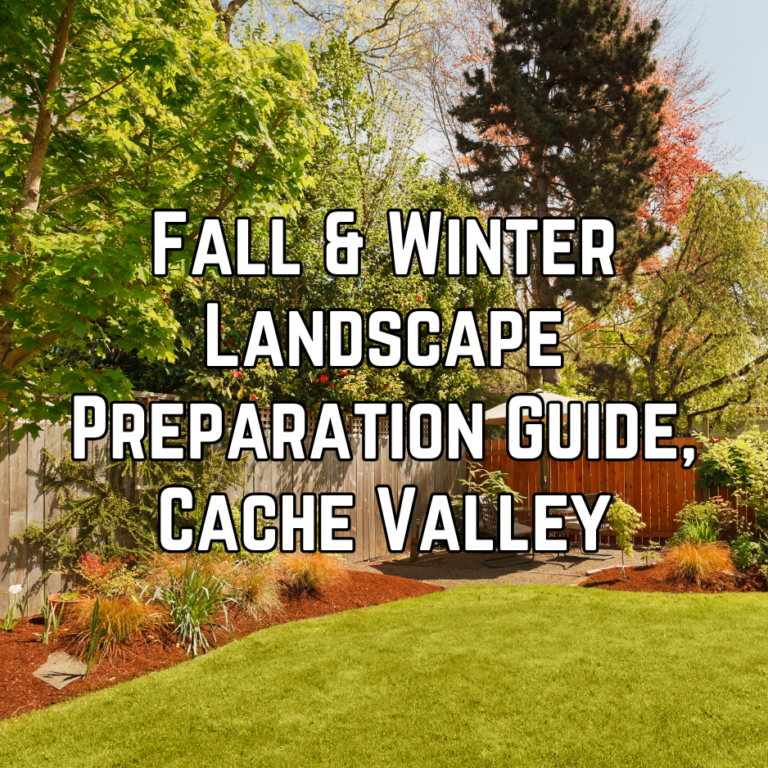
The Complete Fall & Winter Landscape Preparation Guide for Cache Valley Homeowners
Introduction
Cache Valley’s transition from autumn to winter isn’t just a change in scenery; it’s a critical period that determines whether your landscape thrives or struggles come spring.
Proper fall preparation can prevent thousands of dollars in damage to your irrigation system, lawn, and plantings while setting the foundation for a healthier, more vibrant landscape next year. For homeowners in Logan, North Logan, Hyde Park, Smithfield, and throughout Cache Valley, understanding our unique climate demands is essential for protecting your landscape investment.
Our region experiences some of Utah’s most dramatic temperature swings, with winter lows reaching -10°F to -25°F and heavy snowfall that can exceed 100 inches annually in some areas. These conditions create specific challenges that require a strategic approach to fall and winter landscape maintenance.
This comprehensive guide covers everything Cache Valley homeowners need to know about preparing their landscapes for winter, from lawn care and irrigation winterization to protecting trees, shrubs, and hardscapes through our coldest months.
Understanding Cache Valley’s Winter Climate Challenges
Cache Valley sits at approximately 4,500 feet elevation with a semi-arid climate characterized by cold, snowy winters and hot, dry summers. Our USDA Hardiness Zone classification of 4b to 5a means plants must tolerate winter temperatures between -25°F and -15°F to survive.
Key Climate Factors Affecting Winter Preparation:
- First Frost: Mid to late September (average around September 13-26)
- Last Frost: Early to mid-May (May 1-10 for Logan area)
- Average Annual Snowfall: 50-100+ inches depending on location
- Freeze-Thaw Cycles: Multiple cycles throughout winter can damage hardscapes and plant roots
- Dry Winter Air: Low humidity stresses evergreens and ornamental plants
These conditions demand proactive preparation starting in early September and continuing through the first hard freeze, typically in late October or early November.
Part 1: Fall Lawn Care for Cache Valley
Aeration: The Foundation of Winter Lawn Health
Fall is the optimal time to aerate your Cache Valley lawn. Aeration involves removing small plugs of soil to allow air, water, and nutrients to penetrate deep into the root zone. For our clay-heavy soils, this process is particularly important.
Why Fall Aeration Matters:
Cache Valley’s soil composition includes significant clay content, which compacts easily under foot traffic and irrigation. Compacted soil restricts root growth and prevents water from reaching where your grass needs it most.
Optimal Aeration Timing:
The best time to aerate cool-season grasses in Cache Valley is September, when temperatures have cooled but the grass is still actively growing. This timing allows:
- Grass roots to recover quickly before winter dormancy
- Nutrients from fall fertilization to reach the root zone
- Better water penetration during fall rains and before ground freeze
Aeration Best Practices:
- Soil Moisture Check: Aerate when soil is damp but not saturated. Insert a screwdriver into the ground; if it goes in easily, conditions are right
- Equipment Selection: Use a hollow-tine (core) aerator rather than a spike aerator for best results in clay soils
- Multiple Passes: Make passes in perpendicular directions for thorough coverage
- Leave Plugs: Let soil plugs decompose naturally on the lawn; they’ll break down within 2-3 weeks
Fall Fertilization: Storing Energy for Spring
Winterizing fertilizer is one of the most important applications you’ll make all year. Applied in late October to early November, it provides nutrients that roots store throughout winter and use for vigorous early spring growth.
Why Fall Fertilization Works:
Cool-season grasses like Kentucky bluegrass and tall fescue—the primary grass types in Cache Valley—continue root growth even as top growth slows in fall. The fertilizer’s nutrients travel to the root system, where they’re stored and accessed when growth resumes in spring.
Fall Fertilization Guidelines:
- Timing: Early to mid-September for first application; late October to early November for winterizing application
- Formula: Use a fertilizer higher in potassium (K) to boost cold hardiness, disease resistance, and wear tolerance
- Application Rate: 1 to 1.5 pounds of nitrogen per 1,000 square feet
- Soil Temperature: Apply when soil temperature is still above 40°F for nutrient uptake
Important Considerations:
Avoid fertilizing frozen soils, as this creates runoff potential. Also, ensure proper watering after application—fertilizer needs moisture to activate and move into the soil.
Final Mowing: Setting the Right Height
The last mowing of the season sets up your lawn for winter success. While you should maintain grass at 3 inches or higher during summer to promote deeper roots, the final cut should be lower.
Optimal Final Mowing Height:
Cut your lawn to approximately 2 to 2.5 inches for the last mowing. This height:
- Reduces the risk of snow mold and other fungal diseases
- Prevents grass from matting under snow
- Helps the lawn focus energy on root storage rather than blade maintenance
- Reduces vole habitat and winter rodent damage
Timing:
Complete your final mowing before the first significant snowfall, typically in late October for Cache Valley.
Fall Weed Control
Autumn is the perfect time to attack perennial weeds like dandelions and field bindweed (morning glory). These weeds are preparing to store energy in their root systems for winter, making fall herbicide applications particularly effective.
Why Fall Weed Control Works:
During fall, perennial weeds transport nutrients downward to their roots. Herbicide applied at this time travels with these nutrients deep into the root system, killing the entire plant rather than just the visible growth.
Application Tips:
- Target perennial broadleaf weeds in September through October
- Apply on days when temperatures are above 50°F
- Avoid application when rain is expected within 24 hours
- Pull treated weeds after they’ve died to prevent spring regrowth
Overseeding for Thicker Spring Lawns
Combining aeration with overseeding creates optimal conditions for establishing new grass. The holes created during aeration provide perfect seed-to-soil contact for germination.
Fall Overseeding Benefits:
- Cooler temperatures reduce seedling stress
- Reduced weed competition compared to spring
- Fall rains provide consistent moisture
- New grass establishes strong roots before winter dormancy
Recommended Seed Mixtures for Cache Valley:
Based on our climate conditions, consider these blends:
| Mixture Type | Composition | Best For |
| Premium Mix | 60% Kentucky Bluegrass, 30% Tall Fescue, 10% Perennial Ryegrass | Most Cache Valley lawns |
| Drought-Tolerant | 70% Tall Fescue, 20% Fine Fescue, 10% Kentucky Bluegrass | Water-conscious homeowners |
| Quick-Establish | 40% Perennial Ryegrass, 40% Kentucky Bluegrass, 20% Tall Fescue | Rapid coverage needs |
Timing:
Complete overseeding by mid-September to allow 6-8 weeks of establishment before hard freeze.
Part 2: Sprinkler System Winterization
Why Winterization Is Non-Negotiable in Cache Valley
Failing to winterize your sprinkler system is the number one cause of irrigation damage in our region. When water freezes inside pipes, valves, and sprinkler heads, it expands with enough force to crack plastic components, burst pipes, and damage backflow preventers.
Potential Damage from Improper Winterization:
- Cracked PVC pipes (repair cost: $200-$800+)
- Damaged backflow preventers (replacement cost: $150-$400)
- Broken sprinkler heads (replacement cost: $5-$30 each)
- Valve damage (replacement cost: $50-$150 per valve)
The cost of professional winterization ($60-$150 depending on system size) is minimal compared to potential spring repair bills that can easily exceed $1,000.
When to Winterize Your Sprinkler System
Timing is critical—winterize before the first hard freeze, typically in late October to early November for Cache Valley.
Key Timing Considerations:
- Schedule winterization at least one week before forecasted hard freeze (below 28°F)
- Most secondary water systems in Cache Valley shut off around October 15
- Don’t wait until the last minute—professional winterization services book up quickly in October
Temperature Guidelines:
| Temperature | Risk Level | Action Needed |
| Above 32°F | Low | Normal operation acceptable |
| 32°F – 28°F | Moderate | Plan winterization soon |
| Below 28°F | High | Winterize immediately |
| Below 20°F | Critical | Significant damage likely if not winterized |
The Professional Winterization Process
A complete sprinkler winterization involves multiple steps to ensure all water is removed from the system.
Step 1: Shut Off Water Supply
Locate and close the main shut-off valve to stop water flow into the irrigation system. In Cache Valley homes, this valve is typically located in a valve box near the property line or in a basement/crawl space.
Step 2: Drain the System
Open all drain valves and low-point drains to release standing water. Some systems have:
- Manual Drain Valves: Located at low points in the system
- Automatic Drain Valves: Release water when pressure drops
Step 3: Blow Out Lines (Critical Step)
The air compressor blow-out method is essential for Cache Valley’s climate. A commercial-grade air compressor forces pressurized air through each zone, expelling all remaining water from pipes and sprinkler heads.
Blow-Out Process:
- Connect air compressor to the system’s blow-out port
- Set pressure to 50-80 PSI (higher pressure can damage components)
- Activate each zone individually for 1-2 minutes
- Watch sprinkler heads—continue until only air (no water mist) comes out
- Work from the farthest zone back toward the compressor
Step 4: Insulate Above-Ground Components
Cover above-ground pipes, valves, and backflow preventers with foam insulation or insulated tape.
Step 5: Adjust Timer Settings
Turn off the automatic irrigation controller or set to “rain mode” to prevent accidental activation during winter.
Step 6: Configure Backflow Preventer
Turn the ports to the open position and set ball valves to 45 degrees to allow any remaining water to drain and prevent freeze damage.
DIY vs. Professional Winterization
While some homeowners attempt DIY winterization, professional service is strongly recommended for Cache Valley’s climate.
| Consideration | DIY | Professional |
| Equipment Cost | $50-$300 (compressor rental) | Included in service |
| Risk of Damage | Higher (incorrect pressure, incomplete drainage) | Lower (experienced technicians) |
| Time Required | 2-4 hours | 15-30 minutes |
| Typical Cost | $50-$100 (rental + materials) | $60-$150 |
| Warranty/Guarantee | None | Often included |
When Professional Service Is Essential:
- Complex systems with many zones
- Systems with unknown layouts or components
- Properties with difficult-to-access valves
- First-time winterization on a new property
Part 3: Protecting Trees and Shrubs
Pre-Winter Tree and Shrub Care
Proper fall care helps trees and shrubs survive Cache Valley’s harsh winters and reduces the risk of cold damage, sunscald, and breakage.
Deep Watering Before Ground Freeze
Evergreens and other plants continue to lose moisture through their foliage during winter, even while dormant. Dry winter winds and low humidity in Cache Valley can cause significant desiccation stress.
Watering Guidelines:
- Provide deep watering in late October, before the ground freezes
- Focus especially on evergreens, newly planted trees, and shallow-rooted shrubs
- Water on warm days when temperatures are above 40°F
- Ensure water penetrates 12-18 inches into the soil
Mulching for Root Protection
A 3-4 inch layer of mulch around trees and shrubs provides critical winter protection in Cache Valley.
Benefits of Winter Mulching:
- Insulates roots from extreme temperature fluctuations
- Stabilizes soil temperature during freeze-thaw cycles
- Retains soil moisture during dry winter periods
- Prevents frost heaving of shallow-rooted plants
Mulching Best Practices:
- Apply mulch after the first hard frost
- Extend mulch to the drip line of trees when possible
- Keep mulch 3-4 inches away from tree trunks to prevent rot
- Use organic materials like wood chips or shredded bark
- Avoid piling mulch against stems (no “mulch volcanoes”)
Protecting Plants from Snow and Ice Damage
Heavy snow loads can break branches and damage the structure of trees and shrubs. Cache Valley’s wet, heavy snow is particularly damaging.
Protection Strategies:
For Columnar Shrubs and Evergreens:
- Tie branches together loosely with soft twine or burlap strips
- Don’t tie too tightly—allow some movement
- Remove ties in early spring before new growth begins
For Hedges and Foundation Plantings:
- Build a frame or tent over vulnerable plants
- Use burlap screens to block drifting snow
- Shake off heavy snow loads promptly after storms
For Young Trees:
- Install tree guards or wraps to protect trunks
- Stake newly planted trees to prevent wind damage
- Consider wrapping trunks with protective wrap to prevent sunscald
Sunscald Prevention
Sunscald occurs when winter sun warms tree bark during the day, then rapidly refreezing at night causes bark cells to rupture. Young trees with thin bark—especially maples, ash, and fruit trees—are most susceptible.
Prevention Methods:
- Wrap tree trunks with commercial tree wrap or plastic guards
- Apply wrap from the base up to the first major branches
- Install on the south and southwest sides of the trunk
- Remove wrap in early spring (April) before growing season
Pruning Considerations
Fall pruning requires careful timing in Cache Valley. While some cleanup pruning is appropriate, major pruning should wait until late winter or early spring.
Fall Pruning Guidelines:
Do Prune:
- Dead, diseased, or damaged branches (anytime)
- Crossing or rubbing branches that could break under snow
- Water sprouts and suckers at the base of trees
Don’t Prune:
- Spring-flowering shrubs (lilacs, forsythia)—wait until after they bloom
- Major structural pruning—wait until late winter dormancy
- More than 25% of live growth—this stresses plants before winter
Part 4: Preparing Perennials and Garden Beds
Cleaning Up Garden Beds
A thorough fall cleanup reduces pest and disease problems while making spring gardening easier.
Cleanup Tasks:
- Remove annual plants: Pull spent annuals after frost kills them
- Cut back perennials: Most perennials can be cut to 3-4 inches above ground
- Clear fallen leaves: Remove from beds to prevent mold and fungus
- Pull late-season weeds: Prevent winter seed set
- Clean up vegetable garden debris: Reduces pest overwintering
Perennials to Leave Standing:
Some perennials provide winter interest or bird food:
- Ornamental grasses (cut back in early spring)
- Sedum with attractive seed heads
- Coneflowers (seeds feed birds)
- Rudbeckia
Protecting Tender Perennials
Some perennials need extra protection to survive Cache Valley winters.
Protection Methods:
Mulching:
Apply 4-6 inches of loose mulch (straw, leaves, or evergreen boughs) over crowns of marginally hardy plants after the ground has frozen.
Covering:
Use burlap or frost cloth over plants that struggle in our zone. Don’t use plastic—it traps moisture and causes rot.
Division:
Fall is an excellent time to divide overgrown perennials. The divided sections establish roots before winter and grow stronger the following spring.
Adding Soil Amendments
Fall is an ideal time to improve soil for spring planting.
Recommended Amendments:
- Compost: 2-3 inches worked into beds improves soil structure
- Aged Manure: Adds nutrients and organic matter
- Sulfur: Lowers pH in our alkaline Cache Valley soils if needed
These amendments break down over winter, making nutrients available when plants resume growth in spring.
Part 5: Hardscape Winter Protection
Protecting Pavers, Patios, and Concrete
Cache Valley’s freeze-thaw cycles can cause significant damage to hardscapes. Water that seeps into cracks expands when frozen, widening cracks and shifting pavers.
Pre-Winter Hardscape Maintenance:
- Sweep and Clean: Remove debris that can trap moisture
- Seal Cracks: Fill concrete cracks with appropriate sealant before freeze
- Re-sand Paver Joints: Sweep polymeric sand into joints to prevent movement
- Apply Sealant: Consider sealing pavers and concrete to reduce water penetration
- Ensure Drainage: Clear drainage channels so meltwater flows away from hardscapes
Choosing Safe De-Icing Products
Traditional rock salt can damage concrete, pavers, and nearby plantings. Choose de-icers carefully.
| De-Icer Type | Concrete Safe | Plant Safe | Effective Temperature |
| Rock Salt (NaCl) | No | No | Above 15°F |
| Calcium Chloride | Moderate | No | Below 0°F |
| Magnesium Chloride | Yes | Moderate | Below 0°F |
| Calcium Magnesium Acetate | Yes | Yes | Above 20°F |
| Sand/Grit | Yes | Yes | All temperatures |
Best Practice:
Use sand for traction and limit chemical de-icers to essential areas. Avoid applying de-icers near planting beds.
Part 6: Snow Removal Preparation
Residential Snow Removal Considerations
Proper snow management protects your landscape while keeping your property safe and accessible.
Pre-Season Preparation:
- Mark Boundaries: Install markers along driveways, walkways, and planting beds so snow removal equipment doesn’t damage landscape features
- Clear Storage Areas: Designate spots for snow piles away from plants and drainage areas
- Service Equipment: Maintain snow blowers and ensure you have adequate shovels and de-icers
- Arrange Services: If using professional snow removal, establish contracts before winter
Snow Removal Best Practices:
- Remove snow promptly before it compacts into ice
- Push snow away from foundation plantings
- Don’t pile snow on or against plants
- Keep hydrants and meter boxes accessible
- Clear paths to emergency exits
Professional Snow Removal Services
For larger properties or businesses, professional snow removal provides reliable, timely service.
Services Typically Include:
- Driveway and Parking Lot Plowing: Commercial-grade equipment for efficient clearing
- Sidewalk and Walkway Clearing: Manual shoveling or snow blowing
- De-Icing Applications: Professional-grade products applied appropriately
- Emergency Response: 24/7 availability during storms
Choosing a Snow Removal Provider:
- Verify insurance coverage (general liability and workers’ compensation)
- Establish clear service triggers (e.g., clearing starts at 1-2 inches of accumulation)
- Define priority areas and service scope in writing
- Request documentation of services performed
Month-by-Month Fall/Winter Checklist for Cache Valley
September
- Aerate lawn
- Apply first fall fertilizer application
- Overseed thin areas
- Begin weed control applications
- Deep water trees and shrubs
- Divide overgrown perennials
- Plant spring-blooming bulbs
- Start planning winterization schedule
October
- Continue fall watering until ground begins to freeze
- Schedule sprinkler winterization
- Wrap young tree trunks for sunscald protection
- Cut back perennials
- Apply mulch around trees and shrubs
- Final mowing at lower height
- Clean and store garden furniture
- Prepare snow removal equipment
November
- Complete sprinkler winterization before hard freeze
- Apply winterizing fertilizer (early November)
- Apply winter mulch to perennials after ground freezes
- Protect vulnerable shrubs with burlap or ties
- Clean up remaining leaves and debris
- Disconnect and store hoses
- Apply protective mulch around garden beds
- Install deer and rodent protection as needed
December – February
- Monitor for vole damage under snow
- Shake heavy snow off evergreen branches
- Avoid walking on frozen lawn
- Check wrapped trees for pest damage
- Plan spring projects and order plants
- Apply de-icer carefully near plantings
- Keep pathways clear for safety
Common Fall/Winter Mistakes to Avoid
Mistake #1: Waiting Too Long to Winterize Irrigation
Many homeowners wait until freezing temperatures arrive before thinking about winterization. By then, damage may have already occurred, or professional services may be fully booked.
Solution: Schedule winterization in early October, even if temperatures are still mild.
Mistake #2: Cutting Grass Too Short Too Early
Lowering mowing height before the final cut removes food-producing blade surface when the grass still needs to store energy for winter.
Solution: Maintain normal mowing height (3 inches) until the final 1-2 mowings, then gradually lower to 2-2.5 inches.
Mistake #3: Neglecting Fall Watering
Cache Valley’s dry fall air and late-season warmth can stress plants. Many homeowners stop watering too early.
Solution: Continue watering trees, shrubs, and lawns until ground begins to freeze, typically late October to early November.
Mistake #4: Improper Mulching
Piling mulch against tree trunks (“mulch volcanoes”) causes bark rot and pest problems.
Solution: Apply mulch in a donut shape, keeping it 3-4 inches away from trunks.
Mistake #5: Using Damaging De-Icers
Rock salt and some chemical de-icers damage concrete and kill plants near walkways.
Solution: Use concrete-safe, plant-friendly de-icers or sand, and apply sparingly.
Conclusion
Preparing your Cache Valley landscape for winter is an investment that pays dividends throughout the year. Proper fall lawn care ensures vigorous spring growth, thorough irrigation winterization prevents costly repairs, and protecting trees and shrubs preserves the structure and beauty of your landscape.
The unique challenges of our region—cold winters, heavy snow loads, dramatic freeze-thaw cycles, and dry winter air—demand a comprehensive approach to fall preparation. By following the guidelines in this article and staying ahead of winter weather, you’ll protect your landscape investment and enjoy a healthier, more beautiful yard when spring returns.
Green Canyon Landscaping provides complete fall winterization services for homes and businesses throughout Cache Valley, including sprinkler blowouts, fall lawn care, and winter preparation. Contact us to schedule your fall services before winter arrives.