
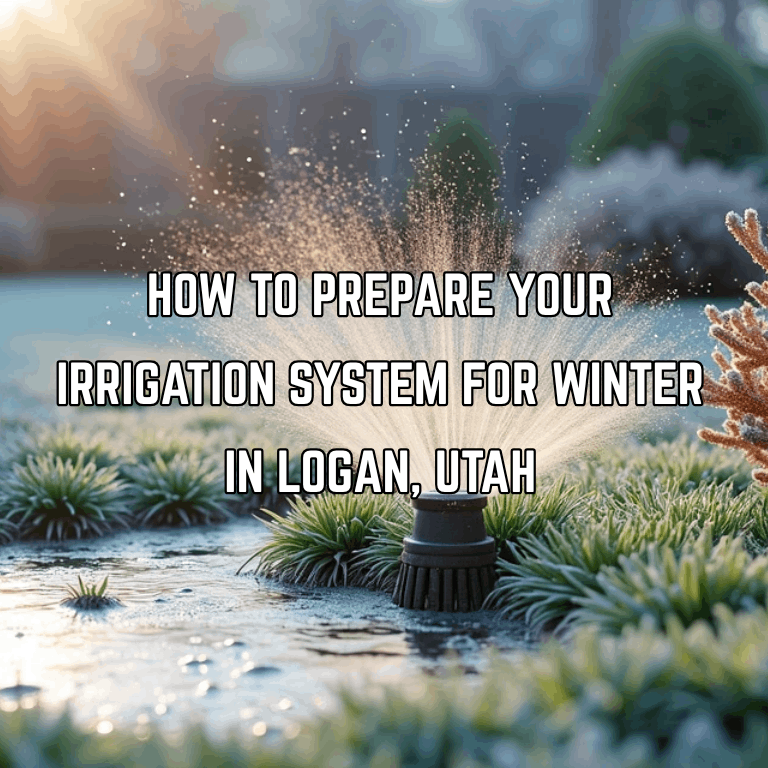
In Logan, Utah, winter can arrive quickly—and when it does, irrigation systems are often one of the first things damaged by freezing temperatures. Proper winterization is not optional in Cache Valley; it’s a critical step in protecting your system from cracked pipes, broken valves, and costly spring repairs.
This guide explains how and when to prepare your irrigation system for winter, why it matters in northern Utah, and what property owners should know to avoid common mistakes
Why Irrigation Winterization Is Essential in Cache Valley
Cache Valley regularly experiences:
- Early fall freezes
- Extended periods below 32°F
- Deep frost penetration
- Freeze–thaw cycles in late fall and early spring
Any water left inside irrigation lines, valves, or backflow assemblies can freeze, expand, and cause internal damage—even if the system appears fine from the outside.
Winterization protects:
- Underground pipes
- Valves and fittings
- Backflow preventers
- Sprinkler heads
- Controllers and sensors
What Happens If You Skip Winterization?
Failing to winterize an irrigation system often leads to:
- Cracked PVC or poly pipe
- Split valves
- Damaged backflow devices
- Leaking sprinkler heads
- Reduced system efficiency in spring
Many of these issues are not visible until the system is turned back on, which can lead to water waste and emergency repairs.
Step-by-Step: How to Prepare an Irrigation System for Winter
1. Shut Off the Water Supply
The first step is closing the main irrigation shutoff valve. This prevents new water from entering the system during winter.
In Logan homes, shutoff valves are commonly located:
- In basements
- Crawl spaces
- Utility rooms
- Near the foundation wall
2. Drain All Water From the System
Removing water is the most critical part of winterization.
There are three common methods:
- Manual drain: Opening drain valves to let gravity empty the lines
- Automatic drain: Valves open when pressure drops
- Compressed air blowout: Forces water out using regulated air pressure
In Cache Valley, compressed air blowouts are the most reliable method due to deep freezing conditions.
3. Protect the Backflow Preventer
Backflow devices are especially vulnerable to freezing.
Proper winter preparation includes:
- Draining all internal water
- Shutting off supply and test cocks
- Insulating or removing exposed components
Many backflow devices in Logan are above ground and require professional handling.
4. Turn Off and Adjust the Controller
After draining the system:
- Turn the controller to “off” or “rain mode”
- Do not leave active watering schedules
- Remove batteries if applicable
Controllers can remain plugged in, but watering cycles should be disabled.
5. Inspect Sprinkler Heads and Valves
Before winter:
- Check for damaged or sunken heads
- Identify leaks or broken components
- Make notes for spring repairs
Addressing issues now prevents surprises when the system restarts.
When Should You Winterize Irrigation in Logan, UT?
Timing matters.
In Cache Valley, irrigation systems are typically winterized:
- Late September through October
Waiting too long increases the risk of early freezes damaging the system.
A good rule of thumb:
- Winterize before consistent overnight temperatures drop below freezing
Common Winterization Mistakes to Avoid
- Waiting until after the first hard freeze
- Skipping compressed air blowouts
- Forgetting the backflow device
- Leaving water trapped in low spots
- Assuming “automatic drains” are enough
Many irrigation failures happen because water remains trapped where it can’t be seen.
FAQs: Irrigation Winterization in Logan, Utah
Do I really need to winterize my irrigation system?
Yes. In Logan and Cache Valley, winterization is essential. Even a single freeze can crack pipes or valves if water is present. Skipping winterization often leads to expensive repairs in spring.
How do you keep an irrigation system from freezing?
The only reliable way is to remove all water from the system. This is typically done using compressed air to blow out lines, combined with shutting off the water supply and draining valves and backflow devices.
Insulation alone is not enough for underground systems.
How cold is too cold for an irrigation system?
Temperatures at or below 32°F (0°C) are enough to freeze standing water. In Cache Valley, extended freezes and deep frost penetration make irrigation systems vulnerable well below this threshold.
That’s why winterization should happen before freezing temperatures become consistent.
What is the 30 30 rule for irrigation?
In irrigation design, the 30/30 rule refers to a practical hydraulic guideline used to prevent pressure loss and uneven water distribution.
For ¼-inch irrigation tubing, a single run should be:
- No longer than 30 feet, and
- Supply no more than 30 gallons per hour (GPH)
Exceeding either limit creates excessive friction loss. Simply put, only a limited amount of water can move efficiently through a small-diameter tube. When the tubing is too long or demand is too high, pressure drops and emitters at the end of the line perform poorly.
As system demand increases, tubing size must increase as well:
- ½-inch tubing: 200 feet / 200 GPH
- ¾-inch tubing: 480 feet / 480 GPH
This principle applies across all irrigation systems. As landscapes expand or water demand grows, larger-diameter tubing is required to maintain consistent pressure and reliable performance. Proper sizing during design helps prevent dry spots, uneven watering, and long-term system stress.
Residential vs Commercial Irrigation Winterization
Residential Systems
- Smaller zones
- Shorter run lengths
- Often winterized in one visit
Commercial Systems
- Larger systems with multiple zones
- Higher air volume requirements
- Backflow compliance considerations
- Often scheduled earlier due to property size
Both require professional attention in Cache Valley conditions.
Final Thoughts
Preparing your irrigation system for winter in Logan, Utah is not just maintenance—it’s protection. Proper winterization prevents hidden damage, extends system lifespan, and ensures a smooth startup when spring arrives.
Taking the time to winterize before freezing temperatures hit is one of the most cost-effective steps property owners can take to protect their landscape investment.
Green Canyon Landscaping provides professional irrigation winterization services throughout Logan and Cache Valley, helping homeowners and property managers protect their systems against harsh northern Utah winters.